Continuous demand
List the steady electrical loads and the required bus voltage. Include conversion losses and the intended operating speed.
Discuss electrical loads →Starter generators
Compare the HF Dynamics SG range and identify the electrical requirements that matter for your installation.
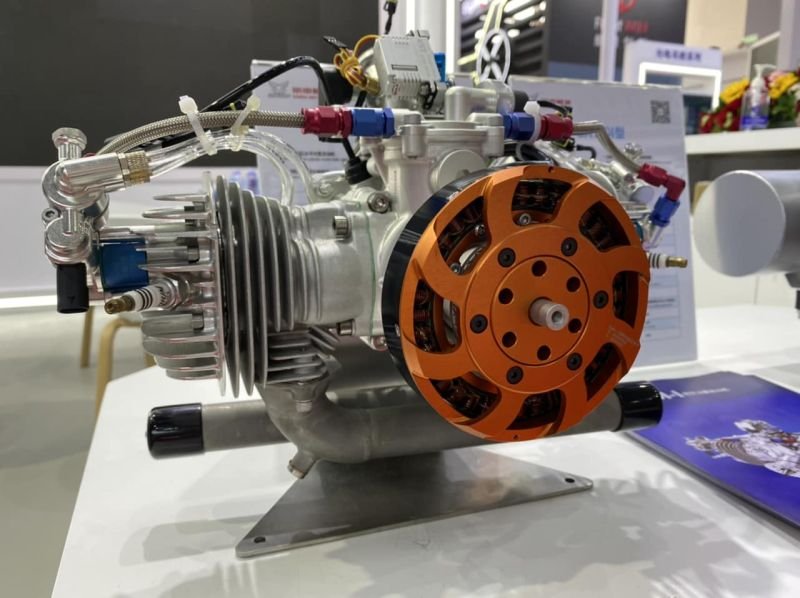
Engine displacement is an initial selection guide. Usable electrical output also depends on operating speed, cooling, voltage, controller configuration and the load profile.
Compare models below, then request the current output curve and installation requirements for the engine and electrical system you are considering.
| Model | Engine-size guide | Published weight | Published output range |
|---|---|---|---|
| HFD-SG-10010 | 20–50 cc | 580 g | 390–1,140 W |
| HFD-SG-10015 | 50–100 cc | 630 g | 580–1,800 W |
| HFD-SG-10020 | 100–170 cc | 860 g | 780–2,280 W |
| HFD-SG-10025 | 170–250 cc | 980 g | 960–2,600 W |
| HFD-SG-13720 | 250–350 cc | 1,470 g | 1,250–4,300 W |
| HFD-SG-16025 | 350–500 cc | 3.5 kg | 2,680–7,700 W |
Reference figures from the published catalogue. Confirm the current product revision, included components, output voltage and test conditions. The top of an output range is not a continuous-output guarantee for every installation.
Document electrical demand at each operating stage so the generator, controller and storage can be considered together.
List the steady electrical loads and the required bus voltage. Include conversion losses and the intended operating speed.
Discuss electrical loads →Identify starting, peak and intermittent loads, their duration, and the battery or buffer strategy.
Discuss starting →Define mounting, cooling, wiring, controller location and the protection and monitoring functions required.
Explore system integration →Send the engine make, model and displacement, the required voltage and your continuous and peak electrical demand.